
How India’s Robotics Startups Are Driving the Future of Automation and Workforce Upskilling
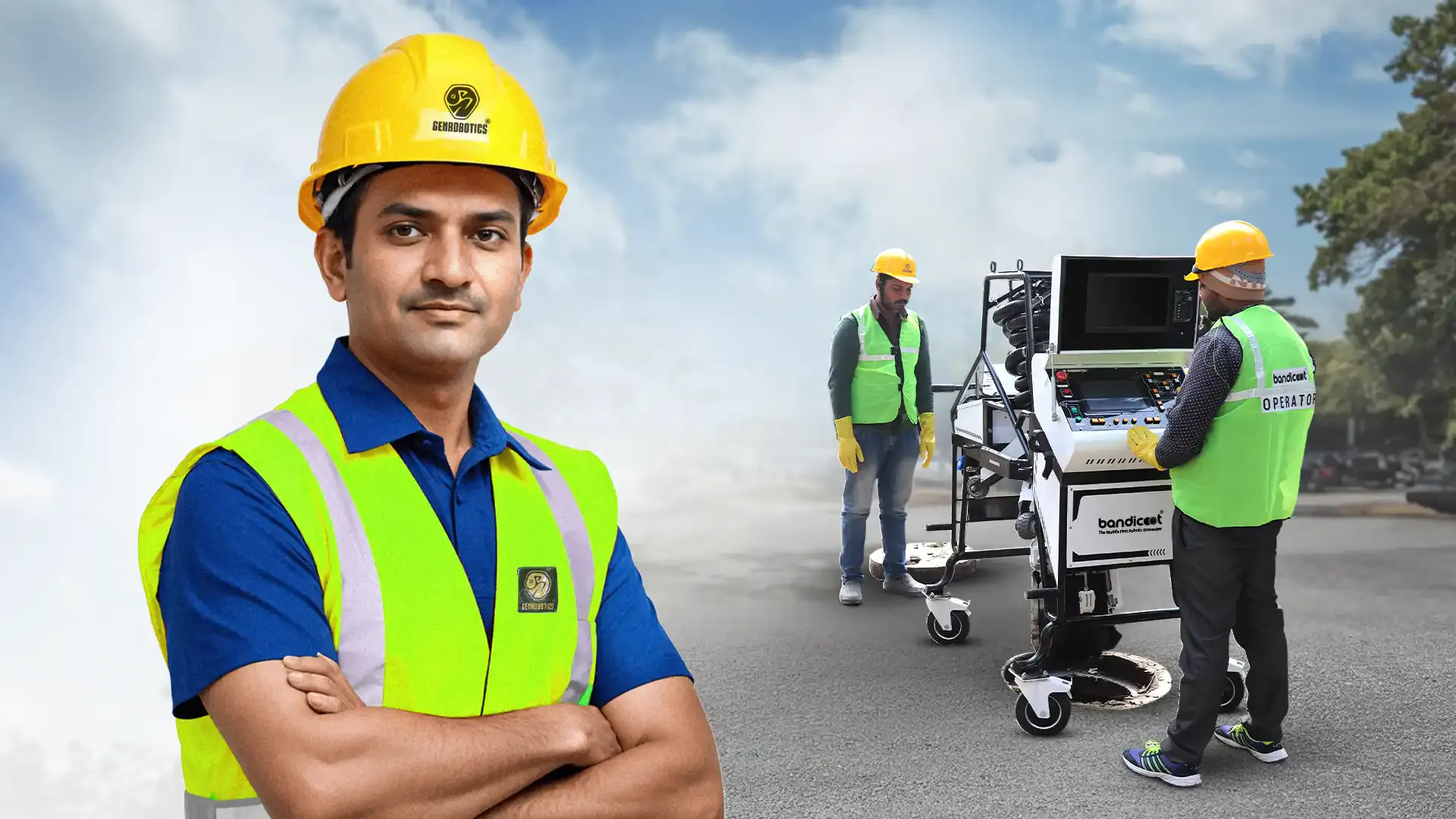
India is entering a new era of technological acceleration, one powered by artificial intelligence, automation, and deep tech innovation. Among the most influential players in this transformation are robotics startups in India, which are redefining how industries operate, how cities function, and how people work.
Introduction
India is entering a new era of technological acceleration, one powered by artificial intelligence, automation, and deep tech innovation. Among the most influential players in this transformation are robotics startups in India, which are redefining how industries operate, how cities function, and how people work.
As global and domestic demand for automation grows, Indian startups are pioneering solutions that make workplaces safer, smarter, and more efficient. Companies like Genrobotics have emerged as torchbearers of this movement, developing robotic systems that solve deeply rooted social, industrial, and cleantech challenges. But beyond innovation, these startups are reshaping something far more crucial, the future of workforce skills and employment.
In this blog, we explore how India’s robotics and deep tech startup ecosystem is driving the next chapter of automation while creating new pathways for workforce upskilling across healthcare, utilities, manufacturing, smart cities, and cleantech.
The Rise of Robotics Startups in India
A decade ago, robotics in India was mainly associated with manufacturing and large-scale industrial automation. Today, the landscape has expanded dramatically. India now hosts hundreds of startups focused on social robotics, industrial automation, healthcare robotics, mobility solutions, disaster management robots, cleantech applications, and smart city technology.
What’s fueling this growth:
1. Rising demand for automation across industries
From hospitals to municipal corporations to oil and gas companies, the need for precision, efficiency, and safety is driving widespread adoption of robots.
2. Government support for deep tech innovation
Initiatives such as Digital India, Make in India, and the National Deep Tech Startup Policy (NDSP) encourage innovation while providing funding and infrastructure.
3. Shift toward safety and sustainability
Industries increasingly seek technological solutions that reduce human exposure to hazardous environments, a space where startups like Genrobotics are already leading in cleantech-driven robotics.
4. India’s evolving talent landscape
Engineers, AI specialists, designers, and robotics researchers are increasingly entering the startup ecosystem, forming a strong foundation for innovation.
India’s robotics ecosystem is no longer about catching up, it is about leading transformation.
Genrobotics: A Deep Tech Startup Solving Real-World Problems
One of the most influential names in this space is Genrobotics, widely recognized as a deep tech startup for healthcare and cleantech. Through innovations like Bandicoot, the world’s first robotic solution developed to eliminate manual scavenging, and G Gaiter, a medically advanced robotic gait rehabilitation system, Genrobotics is demonstrating the multi-sector impact robotics can have.
Its dual focus, solving social challenges and advancing cleantech and rehabilitation technology, reflects a broader trend among robotics startups in India, designing technology that improves everyday life while shaping the future of work.
By addressing real, longstanding problems through robotics, companies like Genrobotics are setting a benchmark for how automation can be purpose-driven, inclusive, and transformative.
How Robotics Startups Are Redefining Workforce Automation
A common misconception is that automation replaces jobs. In reality, robotics in India is shifting human labour toward safer, skill-driven, and higher-value roles. Instead of replacing workers, robots handle tasks that are hazardous, repetitive, or physically demanding, allowing people to move into roles requiring oversight, technical expertise, and decision-making.
Here’s how robotics startups contribute to this evolution:
1. Reducing human risk in hazardous environments
Workers previously exposed to sewage systems, confined spaces, chemical tanks, or unsafe industrial zones can now operate robots remotely.
Genrobotics’ Bandicoot robot, for example, has helped municipal workers transition from manual scavenging to safe robotic operation, a monumental shift in workplace dignity and safety.
2. Increasing operational efficiency across sectors
Automation reduces delays, errors, and costs. Industries like logistics, construction, healthcare, manufacturing, and cleantech now rely on robots for consistency and reliability.
3. Creating new job roles in robotics operation and maintenance
Robotics startups in India are generating roles such as:
- Robot operators
- Automation supervisors
- Mechatronics engineers
- AI and vision system specialists
- Field robotics technicians
These new-age roles require technical understanding but not necessarily advanced degrees, opening doors for a wide range of workers.
4. Supporting smart city modernization
From urban drainage maintenance to public hygiene, robotics startups help city departments function more efficiently and safely. As smart cities expand, so will the demand for robotics-enabled urban maintenance and cleantech roles.
Deep Tech Startups and the Need for Workforce Upskilling
As automation becomes integral to India’s economic growth, there is an urgent need for skilling, reskilling, and upskilling. Robotics startups are playing a major role in this shift by training workers to operate new systems and tools.
Why Upskilling Is Crucial Now
• Industry 4.0 technologies such as AI, IoT, and data analytics require multidisciplinary talent
• Workers need hybrid skill sets, manual expertise plus digital proficiency
• India’s global competitiveness depends on a tech-ready workforce
How Robotics Startups Are Enabling Upskilling
1. On-ground training programs
Startups conduct practical training modules where workers learn to operate robots, diagnose issues, and manage systems. Genrobotics, for instance, trains sanitation workers to operate Bandicoot robots, giving them a future-ready skill set.
2. Collaboration with institutions
Robotics startups often partner with universities, ITIs, and skill development centres to introduce robotics curricula, workshops, and internships.
3. Creating tech awareness in non-tech sectors
Healthcare staff, municipal departments, rehabilitation therapists, and field technicians are increasingly trained to work alongside robots, a major step toward democratizing technology.
4. Building India’s deep tech workforce
Deep tech startup ecosystems require multidisciplinary professionals skilled in:
- AI and machine learning
- Mechatronics
- Cyber-physical systems
- Sensor technologies
- Human–robot interaction
Startups are leading the charge by offering real-world opportunities where these skills can be applied.
Robotics in Healthcare: A New Frontier for Skills and Employment
India’s healthcare sector is undergoing a technology-led transformation. Robotics is playing a major role in diagnostics, surgery, rehabilitation, elderly care, and patient mobility.
Startups like Genrobotics have expanded this space with solutions like G Gaiter, a robotic gait trainer used to rehabilitate patients recovering from neurological injuries.
How This Impacts Workforce Development
- Physiotherapists become robotic therapy specialists
- Hospitals employ robotic operation coordinators
- Technicians are trained in device calibration and patient safety protocols
- Medical colleges integrate robotic therapy modules into their curriculum
This fusion of healthcare expertise and robotics operation is creating an entirely new category of skilled professionals.
Robotics for Cleantech and Smart Cities
India’s urban systems are evolving rapidly, and robotics is critical to improving safety, sanitation, and environmental sustainability.
Deep tech startup innovations are already proving essential for:
- Sewer and drainage maintenance
- Waste management
- Environmental monitoring
- Public hygiene automation
- Hazardous cleaning operations
Workers are shifting from physically dangerous tasks to safe, skilled roles operating, monitoring, and maintaining automated systems. This shift not only protects workers but elevates their job profiles.
Why Robotics Startups Are Key to India’s Future Workforce
India will soon have the world’s largest workforce. To remain globally competitive, this workforce must be equipped with future-ready skills, and robotics startups are uniquely positioned to lead that mission.
Their contribution includes:
- Creating tech-driven jobs
- Shifting labour from hazardous tasks to safer roles
- Training workers in automation
- Advancing India’s deep tech innovation pipeline
- Supporting industries through efficient robotic solutions
- Driving smart-city and cleantech transformation
- Enabling growth in healthcare, manufacturing, and sustainability sectors
With companies like Genrobotics demonstrating how automation can be human-centric, socially impactful, and economically empowering, India is on track to become a global robotics powerhouse.
Conclusion: A Future Built by Startups, Powered by Skills
The rise of robotics startups in India marks a pivotal shift not just in how industries operate, but in how the workforce adapts and grows. Far from replacing humans, robots are opening the door to safer, more respected, and more skilled forms of employment.
With deep tech startup innovation accelerating and technologies like AI, automation, and advanced robotics becoming mainstream, India is moving toward a future where human expertise and robotic precision work hand in hand.
Startups like Genrobotics show that when technology is used responsibly, it can uplift industries, empower workers, and build a nation ready for the challenges of tomorrow.
Related Blogs
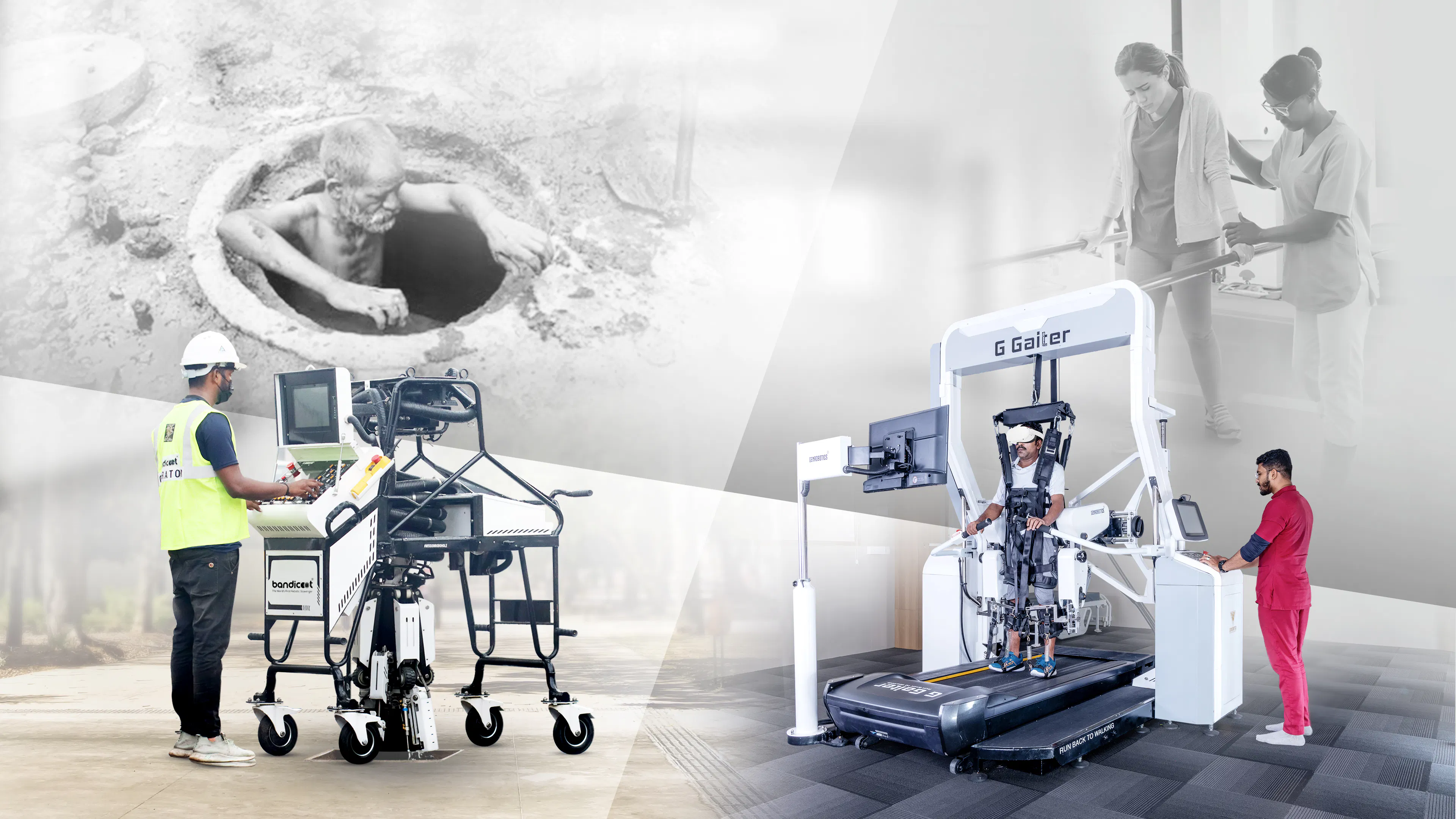
Genrobotics Speaks: How Bandicoot & G-Gaiter Are Transforming India Through Purpose-Driven Deep-Tech Robotics
Discover how Genrobotics is reshaping sanitation, healthcare, and industrial safety in India through deeply human, purpose-driven robotics like Bandicoot and G-Gaiter.
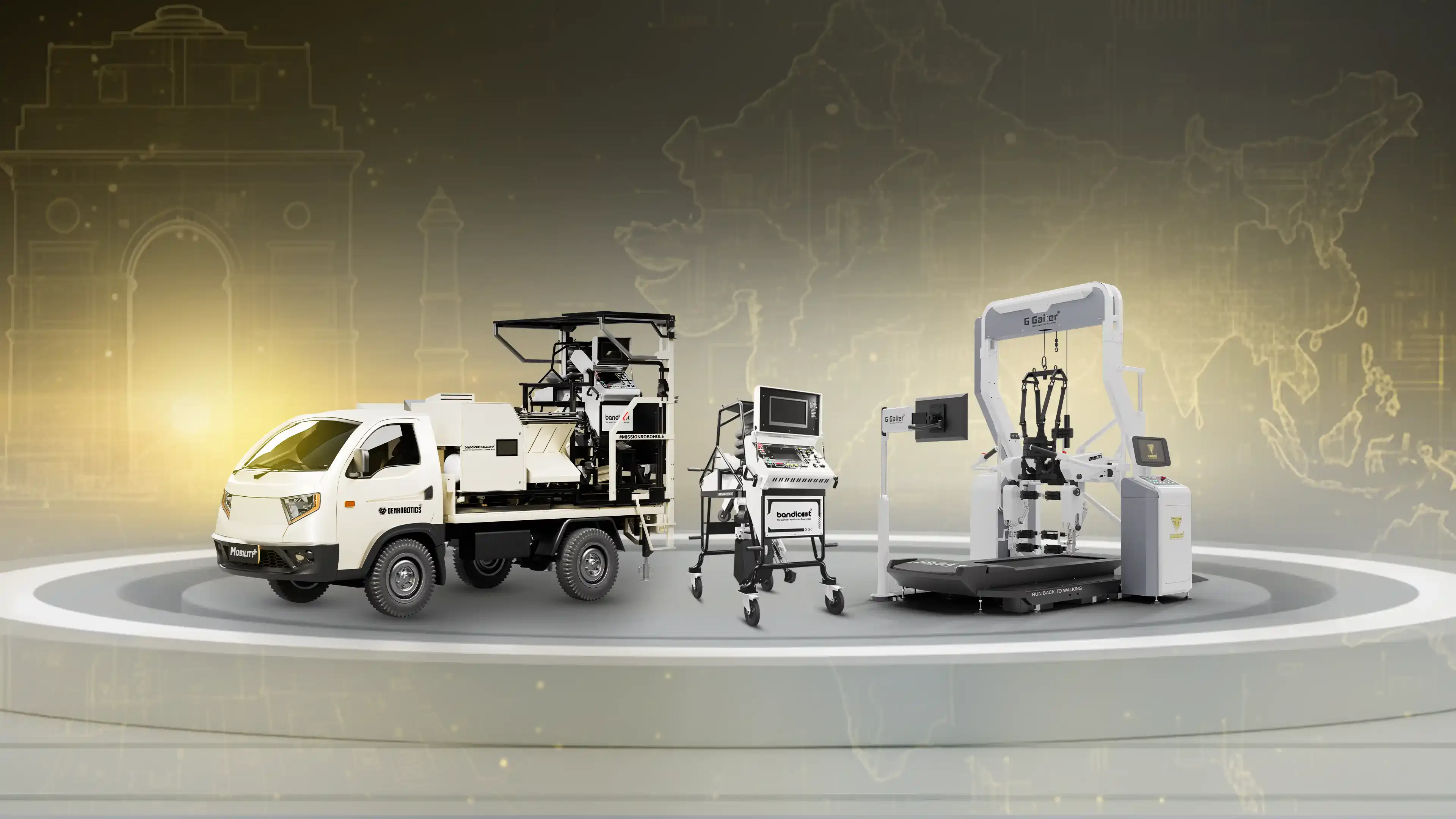
Inside India’s Robotics Revolution | Rise of Deep-Tech Startups Like Genrobotics
Deployment of Bandicoot Mobility+ for manhole cleaning at Ahmedabad Airport with precision that ensures zero-disruption sanitation in a critical aviation environment.
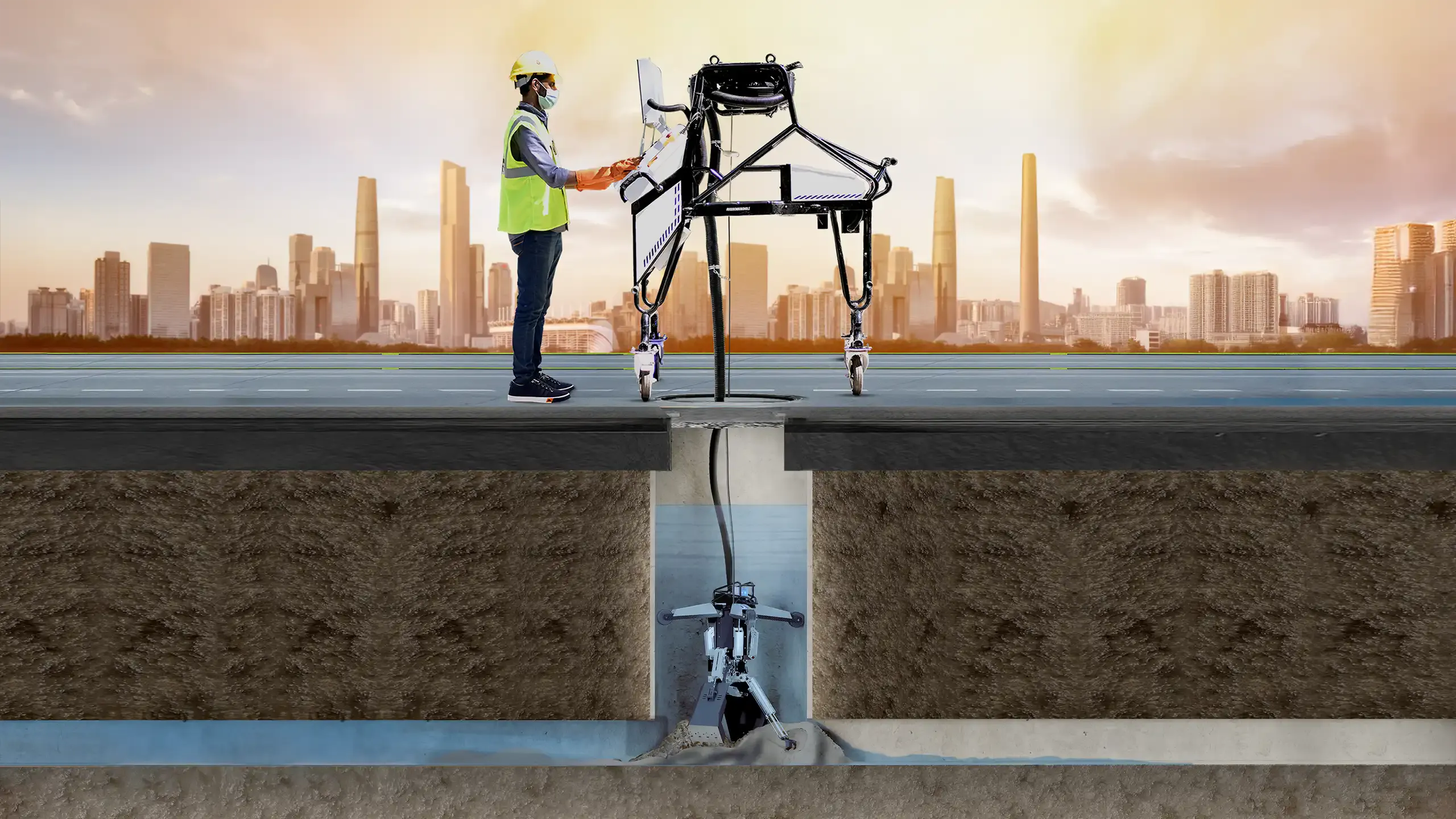
Robotics for Modern Infrastructure, Smarter Drainage and Sewer Management Worldwide
For decades, maintaining these underground systems meant people entering manholes to clean sludge and blockages a dangerous and undignified job that claimed lives. Despite regulations, manual scavenging persisted because alternatives didn’t exist.