
Extreme Environment Robotics in India Explained
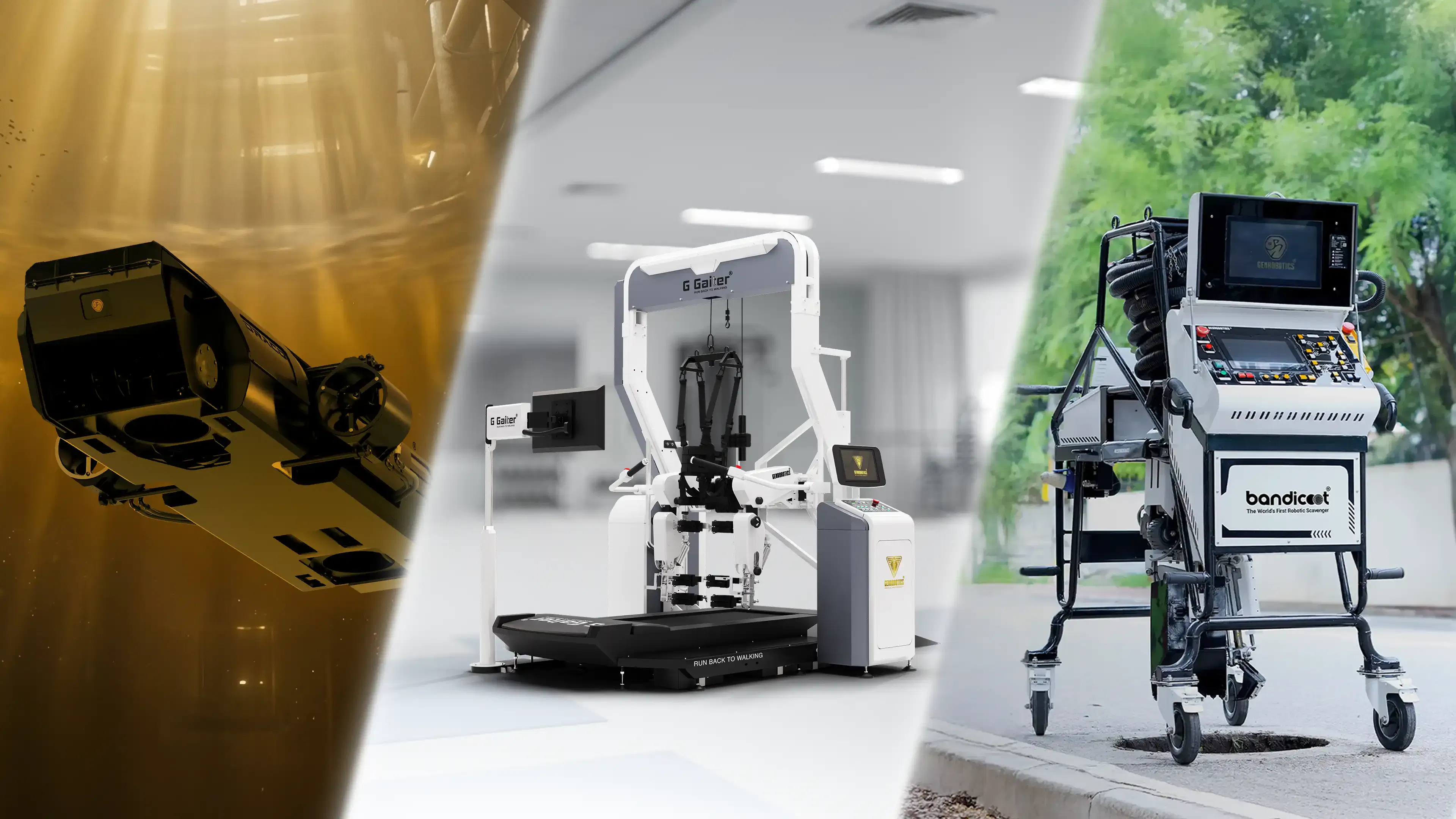
When we think about robotics, we often picture controlled environments and predictable systems. But in India, robotics is evolving in places that are anything but controlled.
When we think about robotics, we often picture controlled environments and predictable systems. But in India, robotics is evolving in places that are anything but controlled.
From sanitation systems to hospitals and oil fields, robotics is being designed for high risk, high variability environments. In this blog, we explore how extreme environment robotics in India is transforming safety, precision, and operational efficiency across industries.
What Is Robotics Built for Extreme Environments?
Robotics built for extreme environments refers to robotic systems designed to operate safely and efficiently in hazardous, unpredictable, or high pressure conditions.
These systems are engineered to:
- Reduce human exposure to risk
- Maintain consistent performance under stress
- Adapt to changing and unpredictable environments
In India, this approach is gaining importance across sanitation, healthcare, and oil and gas sectors.
Why Do Extreme Environments Require Specialized Robotics?
Extreme environments demand robotics because manual work is risky, inconsistent, and often unsustainable.
Key challenges include:
- Exposure to toxic gases and confined spaces
- High precision requirements in healthcare
- Harsh industrial conditions like pressure and corrosion
Traditional tools struggle to perform reliably in such conditions. Robotics offers a safer and more consistent alternative.
How Is Robotics Transforming Sanitation Systems?
Sanitation robotics in India is reducing human entry into hazardous sewer environments by using robotic inspection and cleaning systems.
We have seen sanitation workers operate in dangerous conditions with limited protection. Today, robotic systems are changing that reality.
Key Capabilities of Sanitation Robots
- Navigate narrow and confined sewer spaces
- Detect hazardous gases and environmental risks
- Remove sludge and debris without manual entry
- Provide real time visual inspection
These systems are designed to keep humans out of harm while improving cleaning efficiency.
How Is Medical Robotics Improving Precision in Healthcare?
Medical robotics improves patient outcomes by enabling precise, repeatable, and data driven treatment processes.
In hospitals, the challenge is not ruggedness but accuracy.
Applications of Medical Robotics
- Rehabilitation systems for mobility recovery
- Robotic assisted therapy for consistent movement
- Monitoring systems for patient progress tracking
These systems support healthcare professionals by:
- Reducing variability in therapy
- Enhancing precision in movement
- Providing measurable recovery data
Robotics does not replace clinicians. It enhances their ability to deliver care.
How Are Robots Used in Oil and Gas Environments?
Oil and gas robotics is used for inspection, monitoring, and maintenance in high risk industrial environments.
These environments involve:
- High pressure systems
- Corrosive materials
- Remote and inaccessible locations
Key Functions of Oil and Gas Robots
- Pipeline inspection and fault detection
- Structural integrity monitoring
- Real time data collection
- Reduced need for human exposure
Robotics in this sector focuses on durability and preventive maintenance.
What Connects Sewers, Hospitals, and Oil Fields?
The common link is the need for safety, consistency, and adaptability in high risk environments.
Across all three sectors, robotics addresses similar challenges:
- Minimizing human exposure to danger
- Delivering consistent performance
- Operating in unpredictable conditions
- Supporting data driven decision making
Indian robotics innovation is evolving by solving real world problems rather than ideal scenarios.
How Does Data Improve Robotics in Extreme Environments?
Data enables robotic systems to move from reactive operations to predictive intelligence.
Modern robotic systems collect and analyze data to improve performance.
Examples Across Industries
- Sanitation: Identifying recurring blockages
- Healthcare: Tracking patient recovery metrics
- Oil and gas: Detecting early signs of equipment failure
This shift allows organizations to:
- Prevent failures before they occur
- Optimize maintenance schedules
- Improve overall system efficiency
How Is Robotics Changing the Nature of Work?
Robotics is redefining human roles by shifting focus from manual labor to supervision and decision making.
Instead of performing hazardous tasks, humans now:
- Monitor robotic systems
- Analyze data insights
- Make strategic decisions
- Ensure operational safety
Machines handle repetitive and risky tasks. Humans focus on expertise and control.
What Is the Future of Extreme Environment Robotics in India?
The future includes adaptive, intelligent, and widely accessible robotic systems across industries.
Emerging trends include:
- AI driven robotics for real time decision support
- Adaptive systems that respond to environmental changes
- Integration with smart infrastructure and healthcare systems
- Expansion into more cities and industrial sectors
As adoption grows, robotics will play a central role in infrastructure, healthcare, and industrial operations.
Conclusion
Robotics built for extreme environments in India is not just about automation. It is about adaptation.
From sanitation systems to hospitals and oil fields, these technologies are designed to operate where risks are high and conditions are unpredictable.
The key takeaway is clear.
Robotics is not replacing human capability. It is extending it.
By improving safety, consistency, and intelligence, robotics is reshaping how critical work is performed in the most demanding environments.
FAQ
What is extreme environment robotics?
Extreme environment robotics refers to robotic systems designed to operate in hazardous or unpredictable conditions such as sewers, hospitals, and oil fields.
Why is robotics important in sanitation systems?
It reduces human exposure to toxic environments and improves efficiency through automated inspection and cleaning.
How does medical robotics improve healthcare?
Medical robotics enhances precision, ensures consistent therapy, and provides data driven insights for better patient outcomes.
What role do robots play in oil and gas industries?
Robots are used for inspection, monitoring, and maintenance, reducing risk and improving operational safety.
Is robotics replacing human jobs in these sectors?
No, robotics is shifting human roles toward supervision, decision making, and system management rather than replacing them.